People often ask me where I get my resilience from.
The truth is that I come from a line of pretty remarkable people. I have been fortunate with the men in my life—my father, my husband, my son, and a cousin who has always felt more like a brother. But if I had to choose men who quietly shaped the way I look at life, it would be my father and my maternal grandfather.
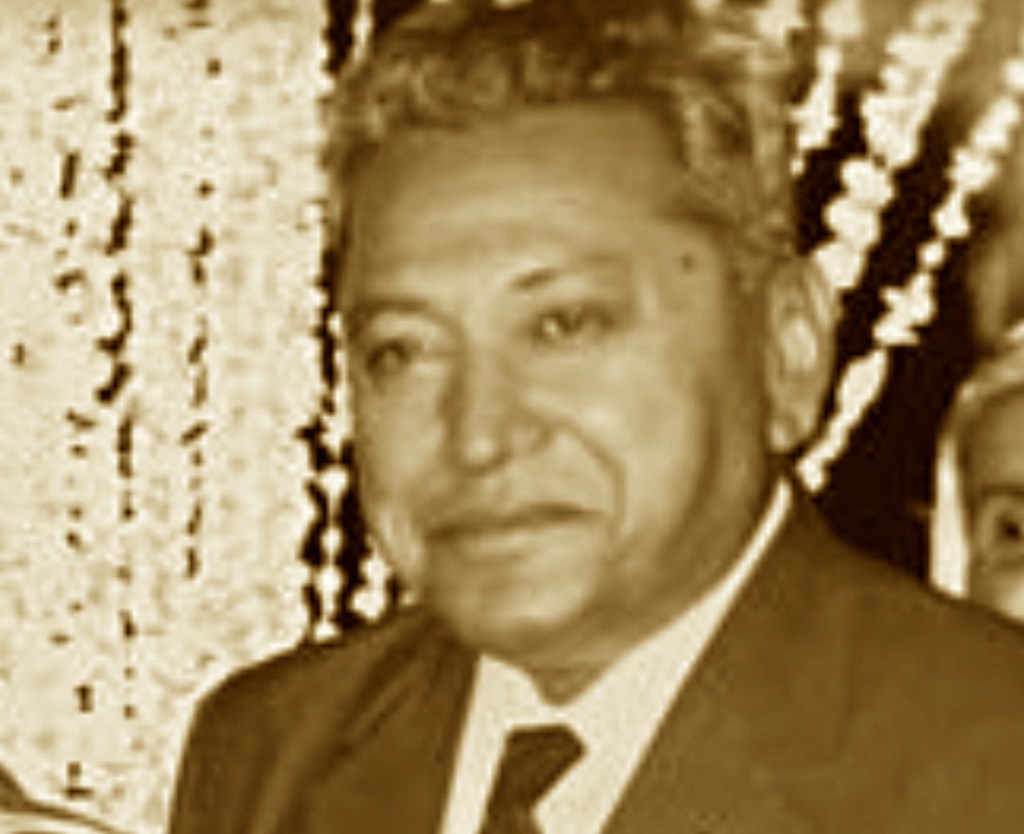
My grandfather was, quite simply, extraordinary.
His own father, an irrigation engineer, had been awarded the title of Rai Bahadur by the British for his work on the canal irrigation system in undivided India. My grandfather had big shoes to fill, and he did.
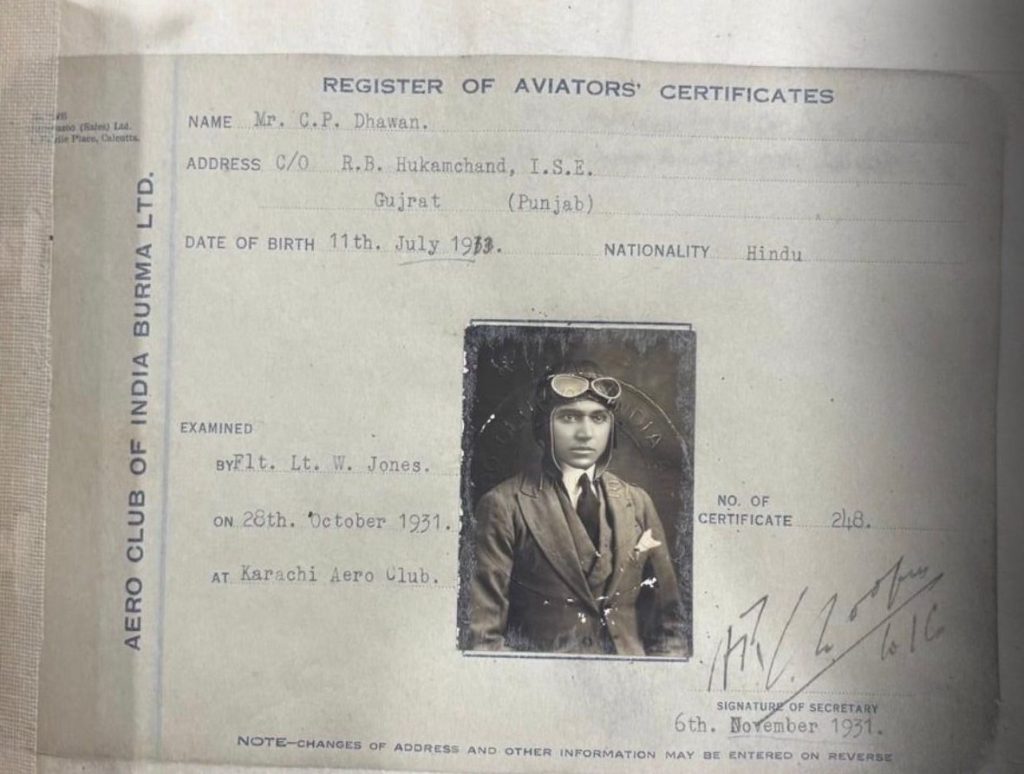
Armed with degrees in both Mechanical and Chemical Engineering, he built a thriving life in Wazirabad, now in Pakistan. He owned land investments in Gujranwala, had various businesses- a rice mill, rubber part making factory, sugar and ice factories, and a transport company. He also had homes in Wazirabad and Lahore, spoke fluent English, Hindi, Urdu and Multani (A regional dialect of Punjabi) since he was originally from Multan, held a commercial pilot’s licence at a time when very few Indians did, played good tennis, was an excellent swimmer, a voracious reader, and bore such an uncanny resemblance to the actor Ashok Kumar that one day, surrounded by an enthusiastic crowd when he drove in his Chevrolet in Amritsar, he eventually gave up protesting and simply signed their autograph books “Ashok Kumar” so he could make his escape.
I like to think the real Ashok Kumar would have appreciated the story.
By all accounts, their life was more than comfortable. Their home had a tennis court, a treasure room in the basement and the family was prosperous, and my mother, the eldest of four children, spent her early years in that world.
Then came the Partition. In 1947, British India was divided into two nations—India and Pakistan. It triggered what was possibly the largest mass migration in human history, forcing an estimated 15 to 20 million people to flee across newly drawn borders based largely on religion. Amidst the violence and chaos where over a million people lost their lives, families abandoned homes, businesses, and everything they owned in search of safety.
Like countless families my grandparents, lost everything overnight.
The man who had once owned several businesses along with a fleet of Chevrolets and Impalas, flew a Gipsy Moth just for fun, arrived in India and bought a bicycle. That bicycle wasn’t a symbol of defeat. It was the beginning of another life.
He started an ice cream factory, rebuilt his business piece by piece, and eventually became one of Kanpur’s most respected businessmen. Whenever my grandmother lamented all they had lost, he would simply say,
“Our biggest jewels are our children. We all made it out alive.”
He never spoke about his life and what he had lost in Pakistan.
Looking back, I think that’s the lesson he taught without ever saying it out loud.
You begin again.
Every summer, we visited my grandparents in Kanpur, and those holidays are woven into some of my happiest memories. We woke up to the smell of freshly brewed malt, followed by breakfasts that could probably have fed an army.
Then the adventures began.
He taught us to shoot a gun. Not because he expected us to become marksmen, but because he believed girls should know how to do everything boys could. And he always wanted us to be able to protect ourselves. He even encouraged all the girls to take up martial arts.
One summer, I saw a man walking on bamboo stilts and announced that I wanted to learn.
Most grandparents might have smiled and moved on.
Mine found the man, brought him home every day, and arranged lessons for me. By the end of the month, I was confidently walking on stilts. He even had a custom set of stilts made for me. Decades later, when I told my five-year-old son the story, he looked at me with complete seriousness and asked, “Did you work in a circus?”
I still laugh every time I think about it.
When I was fourteen, he taught me to drive in the enormous compound of his in-laws’ home in Kashipur. Long before people spoke about empowering girls, he encouraged us to do anything that interested us. At one point he even suggested we should learn to fly a plane.
To him, there was no such thing as “girls can’t.”
There was only, “Let’s see if you can.”
He didn’t raise strong women. He simply never imagined they should be anything else.
As children, we thought he was teaching us to drive, to shoot, to balance on bamboo stilts.
Only years later did I realise he was teaching us something far more important.
That curiosity should always be encouraged.
That confidence grows when someone believes in you before you believe in yourself.
And that no matter how much life takes away, you can always start again.
When cancer arrived in my life—not once, but twice—I didn’t consciously think of my grandfather.
But perhaps a small part of him was already there.
The man who had lost everything, climbed onto a bicycle, and quietly rebuilt an entire life had left his greatest legacy not in the businesses he created, but in the people he helped shape.
I was lucky enough to be one of them.
 Still Me By Rashmi
Leave a comment